



Friedman Family PEACE Program
“Tell me, what is it you plan to do with your one wild and precious life?”
― Mary Oliver
Courses for Penn State Students
Art and Science of Human Flourishing
Course number: HDFS108N
What is the purpose of your life? What is the purpose of your education? What does it mean to not just survive, but to thrive, or flourish? How can your undergraduate years become a greenhouse for flourishing for you – where you gain insight and knowledge, but also learn to be even more creative, caring, resilient, engaged, happy, and part of a community to which you make significant contributions?
fpo-mindfulness
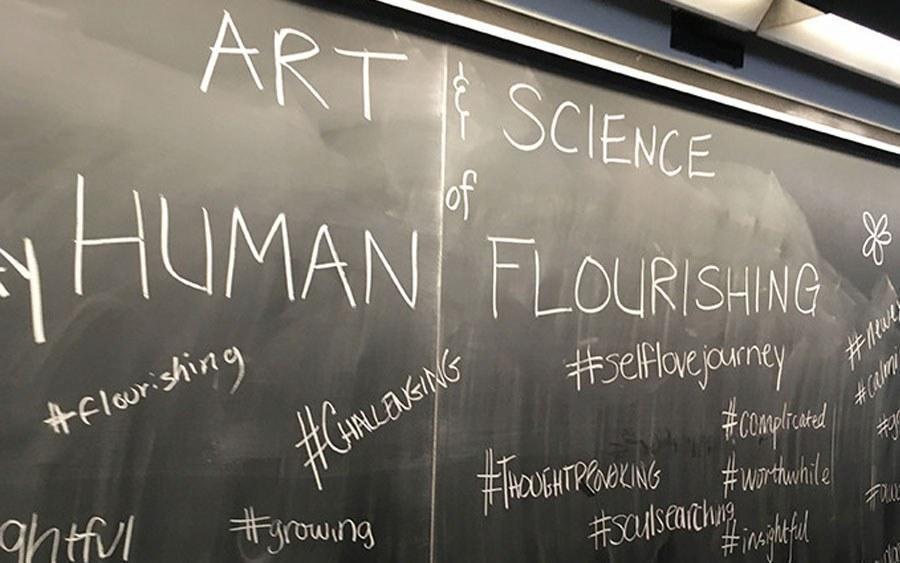
On the final day of class, students added important concepts they learned to the chalkboard.
Are there practices by which you can cultivate what it takes to live a flourishing life?
This course aims to assist you in finding the answers to these questions for yourself, building a sustainable base for flourishing during your undergraduate years and beyond. You will explore scientific, philosophical, and artistic ideas about flourishing, while experimenting with contemplative practices that work directly with your mind, body, emotions, and relationships. Together, after exploring the foundations of flourishing, we will investigate the cultivation of flourishing according to a model with five dimensions (foundations, awareness, connection, wisdom and integration.)
Video: Briana Blackwell describes the Art and Science of Human Flourishing
Article: A student perspective on the Art and Science of Human Flourishing
Art and Science of Successful Aging
Course number: HHD & AA 197
This course offers students the opportunity to investigate the processes of healthy aging and maturation from a transdisciplinary perspective that draws upon developmental and biomedical science, contemplative (e.g., mindfulness & compassion practice), art and embodiment practices, and their own experience. Topics will focus on understanding common experiences and challenges that people face in the context of psychological, behavioral, social, and biological changes that they experience during adulthood. Course activities include small group discussions and structured exercises that reinforce concepts introduced in lectures and assigned readings. Students will develop conceptual knowledge, experiential insight, and practical skills for navigating adulthood, building meaningful intergenerational relationships, and cultivating an awareness of shared humanity and inclusivity across generations.
Mindfulness in Human Development
Course number: HDFS 497x
Mindfulness has become a pillar of many programs and practices within human development and education. In this course, we will (1) explore the research on why and how mindfulness can support healthy development across the lifespan and (2) critically examine how prevention and intervention programs aim to cultivate these skills. Students will also experience a variety of meditations throughout the course as we discuss how to integrate these practices into our personal and professional lives.
Creativity and the Arts in Human Flourishing
Course number: HDFS111
This course will explore the roles of aesthetic experience, the arts, and creativity in personal and collective flourishing, and offer experiential learning opportunities for students to develop their aesthetic awareness and creative capacity through observing, participating in, and reflecting on various kinds of artistic performances, art installations, and art-making activities, and exploring the role that aesthetic experience plays in their identity development and flourishing. This course was made possible with support from The Andrew W. Mellon Foundation.
Arrival Practices for Students
“Let’s take one more deep breath. In with peace and out with stress.”
Associate Teaching Professor of Human Development and Family Studies Molly Countermine has a teaching style that embodies empathy, compassion and awareness. She sums up her approach as “Grace before grades, relationships before rigor” and believes deeply that students learn best from people they trust.
Dr. Countermine begins each class with an arrival practice, a 2-minute meditation that allows everyone to take a break out of their busy schedules and re-focus. She may read a poem, a passage from a book, or a use a guided meditation practice.

meditatingwlaptop-AdobeStock_332238731-fizkes
Arrival practices are designed to settle the body and mind and can be a great start to any class or meeting.
Her classes can have more than 600 students, and the arrival practices build a feeling of shared community and connection — even over Zoom. She starts each semester by telling students that they are welcome to let her know of any issues they are experiencing outside of class that may be affecting their participation in class. She says, “we all know that prevention is the best intervention.”
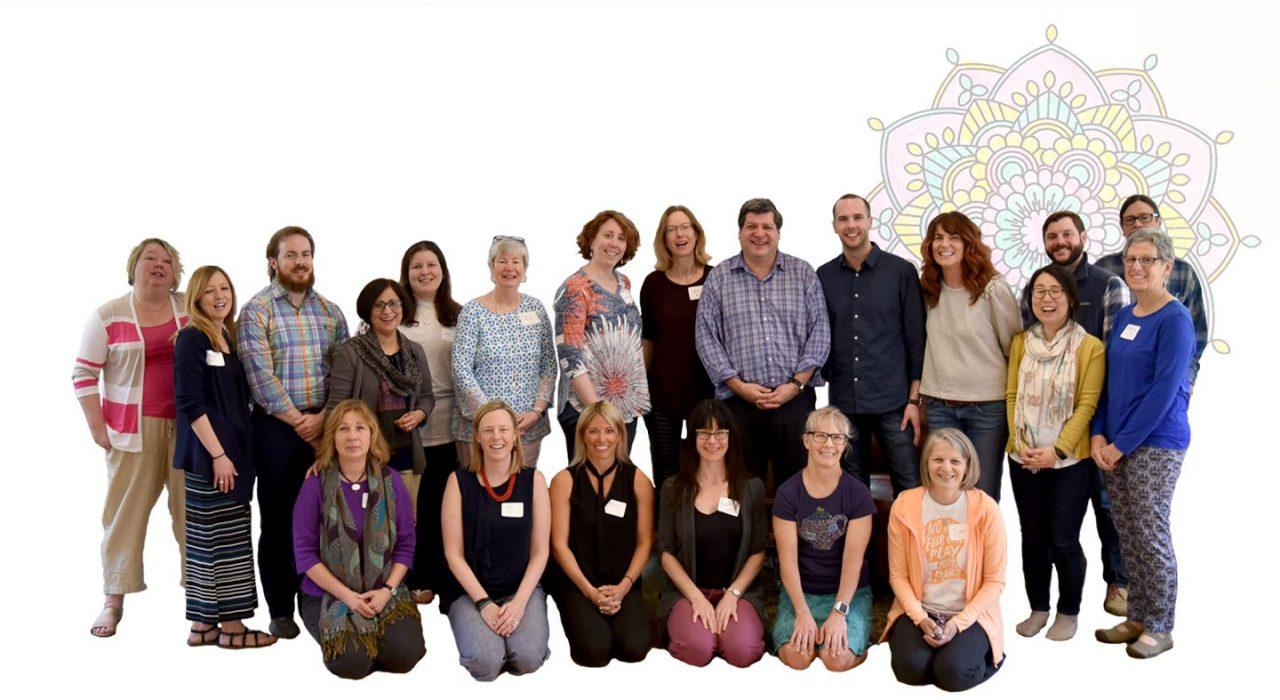
Caption: In May 2019, teachers from several Penn State campuses convened at the Summer Teaching Institute to learn more about teaching “The Art and Science of Human Flourishing” to their students. The course is part of the Student Flourishing Initiative, a multi-university collaboration that is led by Robert Roeser in conjunction with colleagues at the University of Virginia and University of Wisconsin-Madison.